Genuine Grape
Search wines

Explore

Wine list scannerWine journalBlogWine atlas

Grape & soil guides

Riesling and slateChardonnay and limestoneSyrah and graniteAssyrtiko and volcanic soilGamay and granite

Shop by country

AustraliaCanadaDenmarkNetherlandsSingaporeUnited KingdomUnited States
© 2026 Genuine Grape. Owned and operated by SG Wine Club Pte. Ltd. · 202303865R
Find usX
Privacy PolicyTerms of ServiceMap creditsAccount Deletion
Genuine Grape
Search wines
Wine atlasQuebecFranceBordeauxCôtes de Castillon

Côtes de Bordeaux Castillon

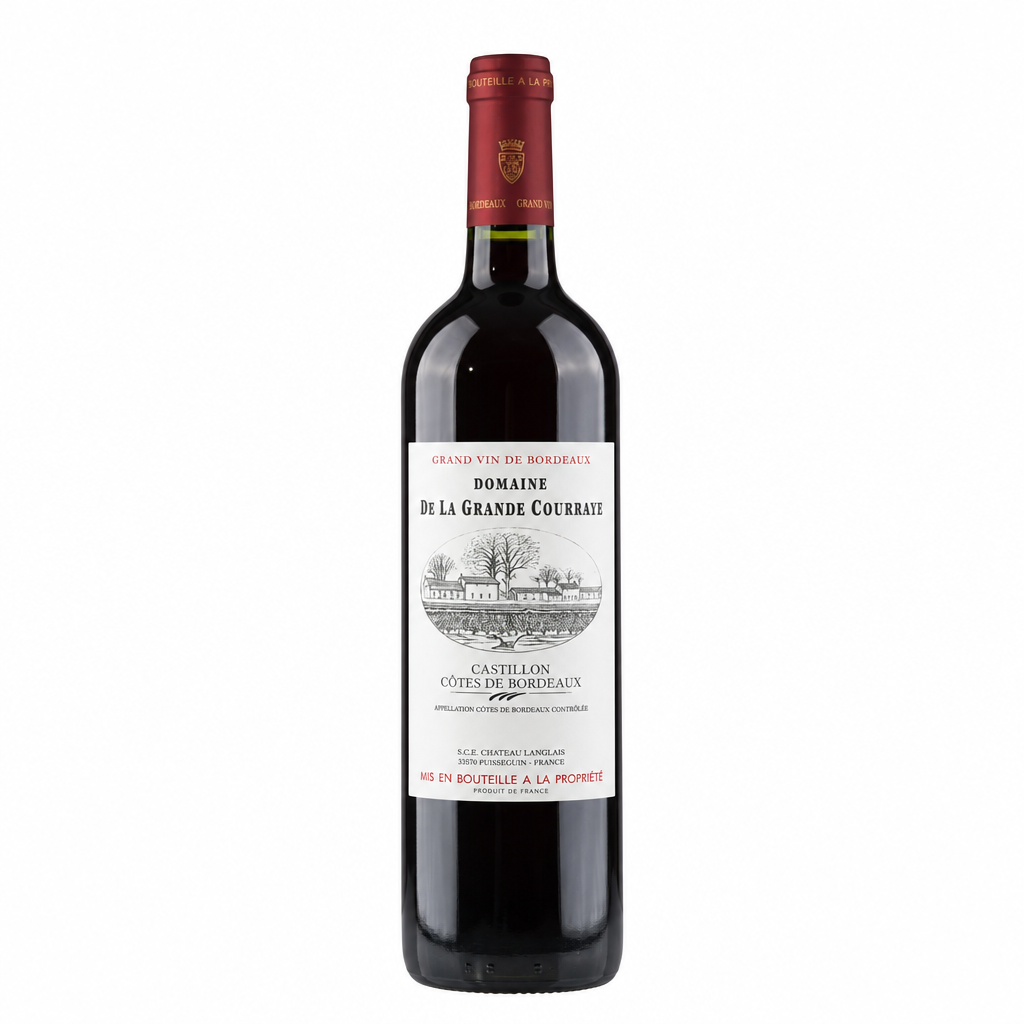
Domaine de la Grande Courraye

Red · Côtes de Castillon, France

Savory

Dry · Natural · Fruit-forward · Crisp

Buy in

Choose your province or territory

Find wine offers available in your province or territory.

CanadaAll provinces and territoriesAlbertaBritish ColumbiaManitobaNew BrunswickNewfoundland and LabradorNova ScotiaNorthwest TerritoriesNunavutOntarioPrince Edward IslandQuebecSaskatchewanYukon

Choose the country for prices and shop offers.

SingaporeSGDUnited KingdomGBPAustraliaAUDBelgiumEURCanadaChoose a province or territoryDenmarkDKKGermanyEURNetherlandsEURUnited StatesChoose a state

Vintage not listed · 750 ml

No shop offers for this bottle in Quebec right now.

Technical details

Vinification & maturation

Native yeast fermentationCold pre‑fermentationTwo‑week fermentationOrganic grapesStainless‑steel agingNo oak

Grapes

MerlotCabernet FrancCabernet Sauvignon

Soils

ClayLimestoneSilt

Producer

Domaine de la Grande Courraye

France

Domaine de la Grande Courraye is a multigenerational, family-owned estate in Bordeaux, run by the Dupuy family with Gérard Dupuy now expanding the farm. Its approximately 35-year-old vineyards lie on silty limestone-clay soils, managed through superficial ploughing, cover crops, and chemical-free farming. The estate is certified organic by ECOCERT and Demeter-certified biodynamic. Grapes are fermented with indigenous yeasts, without chaptalization or acidification, then aged in steel tanks. Winemaking includes cold pre-fermentation and a two-week alcoholic fermentation at 28–30°C, combining traditional methods with a clear focus on natural vineyard and cellar practices.