
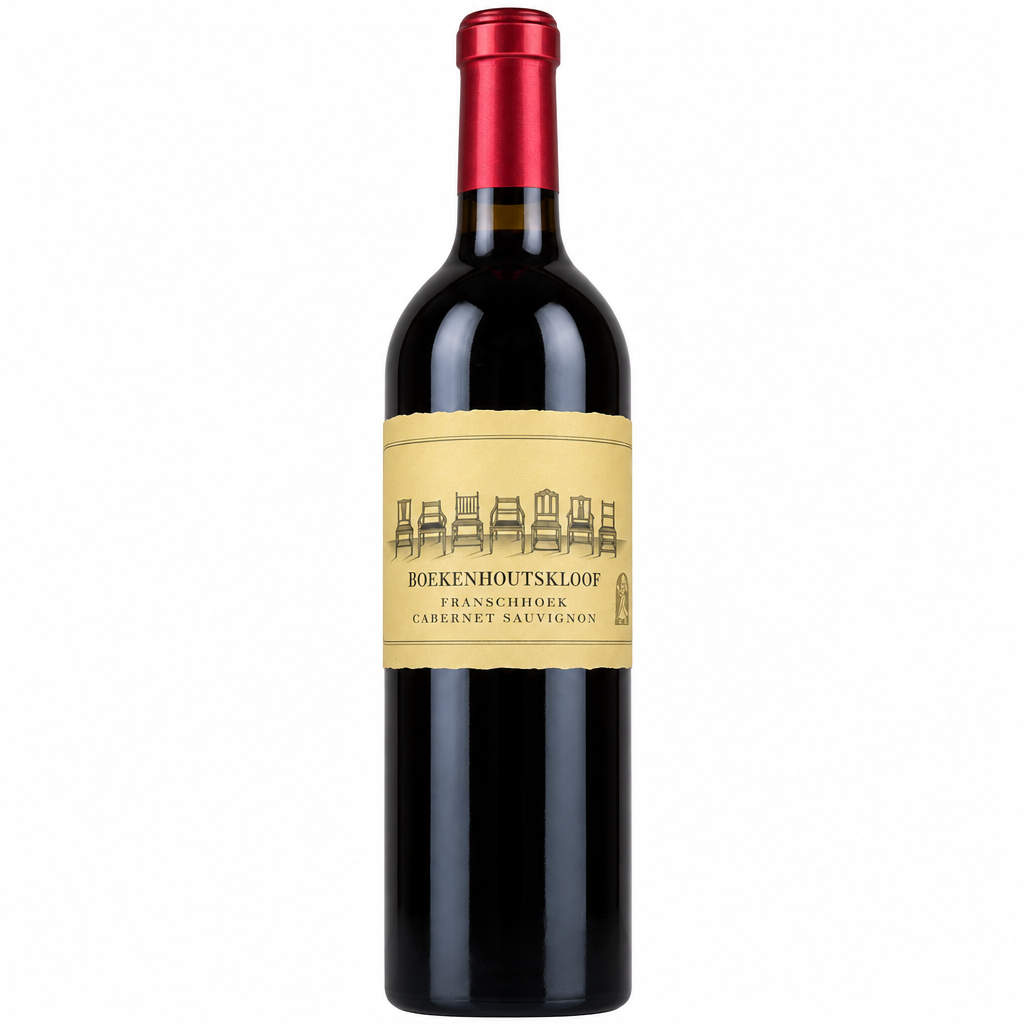
2020 · FHK Cabernet Sauvignon
Boekenhoutskloof
Red · Franschhoek Valley, South Africa
Bold structured
Dry · Fruit-forward · Modern · Smooth
Technical details
Vinification & maturation
Cold macerationConcrete fermentation vesselsSpontaneous alcoholic fermentationNatural malolactic fermentation22 months on OXOline80% new French oakLight-toast French oak
Grapes
Cabernet SauvignonCabernet Franc
Producer
Boekenhoutskloof
South Africa
Boekenhoutskloof is a Western Cape producer directed by Marc Kent, with roots dating to 1776 and a relaunch in the early 1990s. Since acquiring the Porseleinberg estate in Swartland in 2009, the estate has expanded its vineyard holdings to include Porseleinberg, the adjacent Goldmine/Kasteelberg property and a partnership vineyard, reducing reliance on outside growers. Winemaking is led by Godfried Mocke in Franschhoek, while Callie Louw oversees the Porseleinberg wines and the Swartland farms. The house follows a low-intervention approach, with wild-yeast fermentations, no acidification, and the use of concrete vessels, large foudres and fired-clay amphorae. Porseleinberg has been farmed fully organically since 2016, following earlier organic and biodynamic trials.
Production scale
Industrial
>360k bottles/yr