
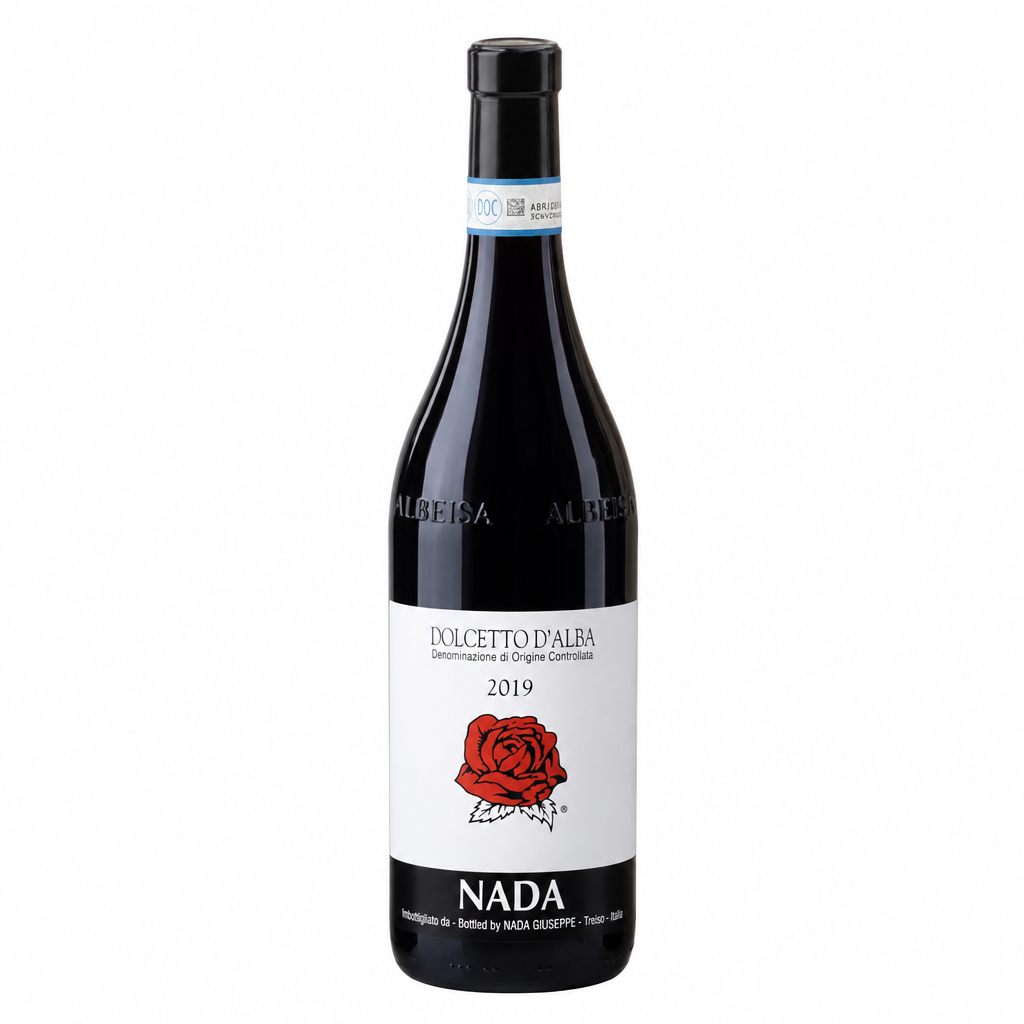
Dolcetto d'Alba
Nada Giuseppe
Red · Dolcetto d'Alba DOC, Italy
Fruit-forward
Dry · Classic · Light-bodied
Technical details
Vinification & maturation
Stainless steel fermentation28‑30 °C fermentationDaily pump‑oversNative yeast6 ‑8 months steel aging
Grapes
Dolcetto
Producer
Nada Giuseppe
Italy
Nada Giuseppe is a family-owned winery in Treiso, one of the Barbaresco villages in Piedmont, with roots in the area going back to the early 1900s and direct family ownership since the 1960s. Today Enrico Nada, son of the founder, oversees farming, winemaking, and blending. The estate has been certified organic since 2017, after converting in 2014, and uses native yeasts for all red wine fermentations. Their style is traditional and restrained: no barrique or heavily marked oak, but large Slavonian and Allier oak casks used for decades to preserve finesse. Producing Barbaresco, Nebbiolo, Barbera, and Dolcetto, the winery aims for balance, complexity, and harmony, with wines described as elegant, spicy, refined, and strongly expressive of their territory.
Vineyard scale
Micro artisanal
<10 ha
Production scale
Micro artisanal
<30k bottles/yr