
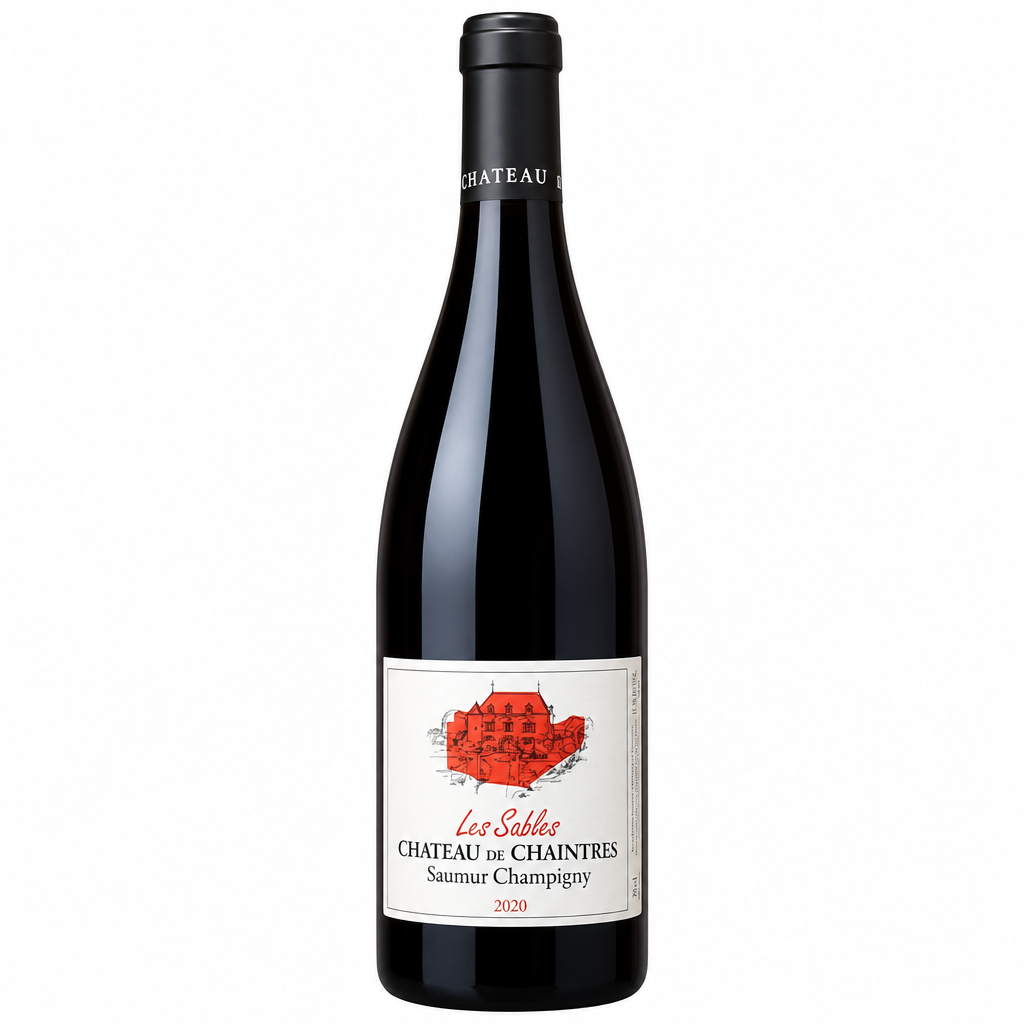
2025 · Les Sables
Château de Chaintres
Red · Saumur-Champigny, France
Fruit-forward
Dry · Light elegant · Smooth · Crisp
Technical details
Vinification & maturation
Manual HarvestVineyard SortingFull DestemmingTemperature-Controlled Stainless10–12 Day MacerationStainless-Steel AgingFine-Lees Aging
Grapes
Cabernet Franc
Soils
ClayLimestoneSand
Producer
Château de Chaintres
France
Château de Chaintres is a family-run Saumur-Champigny domaine in Dampierre-sur-Loire, rooted in a historic clos first established by the Oratorians in the 17th century and maintained by the de Tigny family since 1938. Elisabeth de Tigny Mourot now directs the estate, combining tradition with modern practice. The vineyards span diverse terroirs planted mainly to Cabernet Franc, with Chenin Blanc also represented, including older vines in Brézé. Farming is certified organic and biodynamic, using compost, plant preparations, natural grassing, massal selection and horse plowing on some plots. Manual harvesting and cellar work focus on gentle extraction, indigenous yeasts, minimal sulfur, no chaptalization or fining, and lees ageing. The resulting wines are intended to express place with balance, energy and depth.